What this stretch is
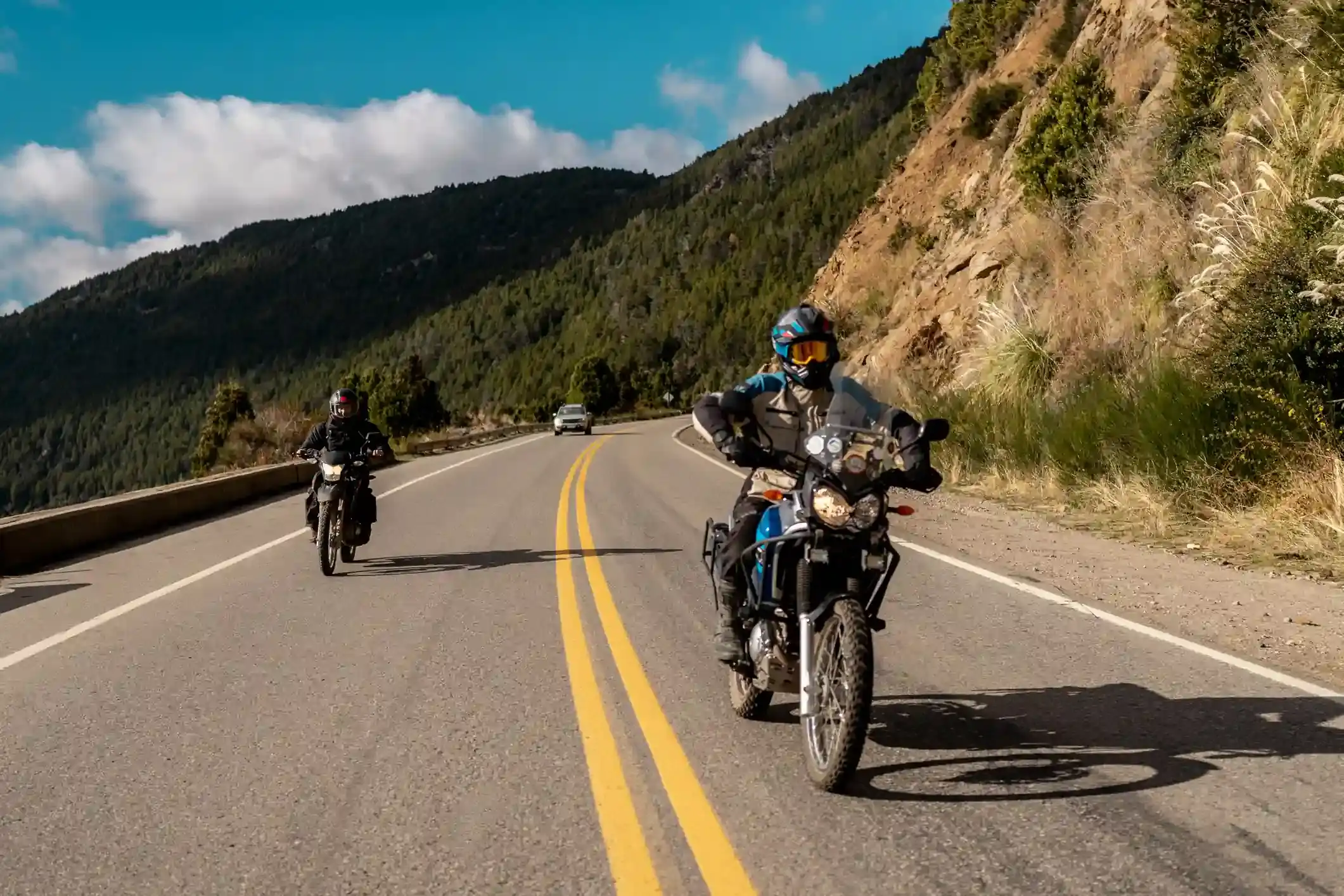
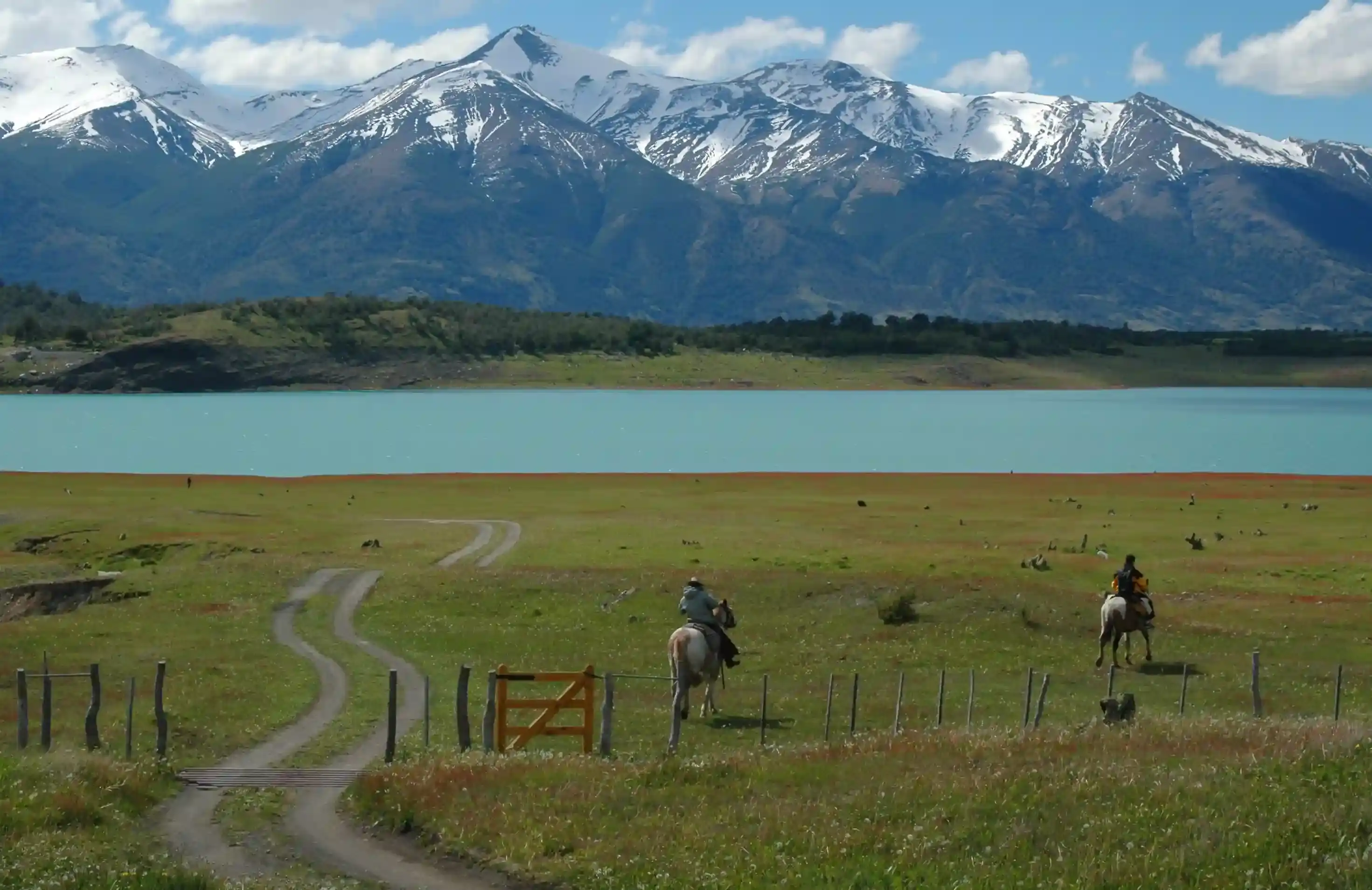
Bariloche to Esquel is the day that eases you into Patagonia. The first 120 km follow the Andes south through the Nahuel Huapi park: Lago Gutiérrez, Lago Mascardi, Lago Guillelmo, then the Río Villegas canyon, where Ruta 40 narrows and twists between rock and river before it drops into the wide valley of El Bolsón. South of El Bolsón the forest thins out through El Hoyo and Epuyén, and after the Leleque plateau the trees are gone: this is where the steppe starts, and it does not stop until El Calafate.
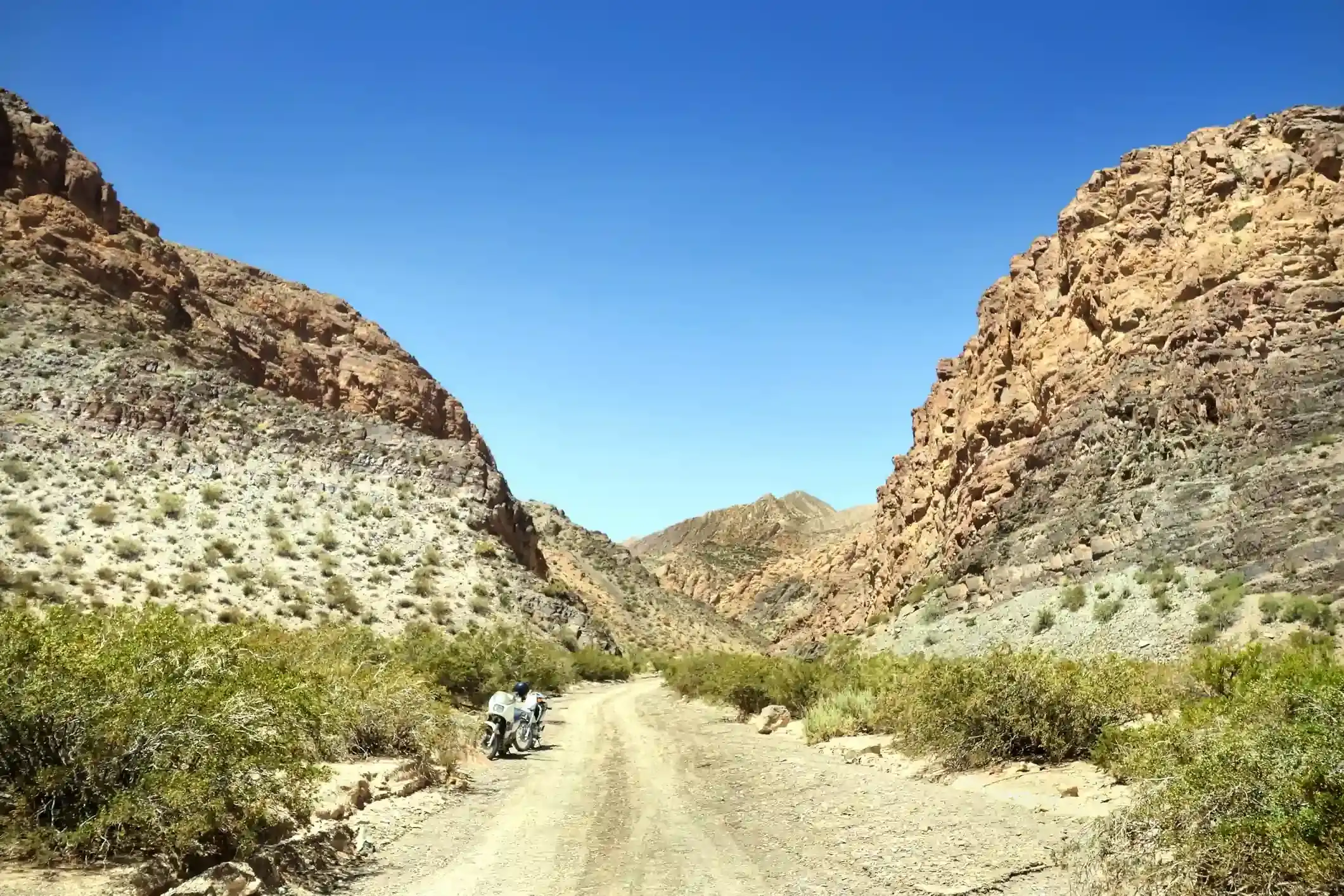
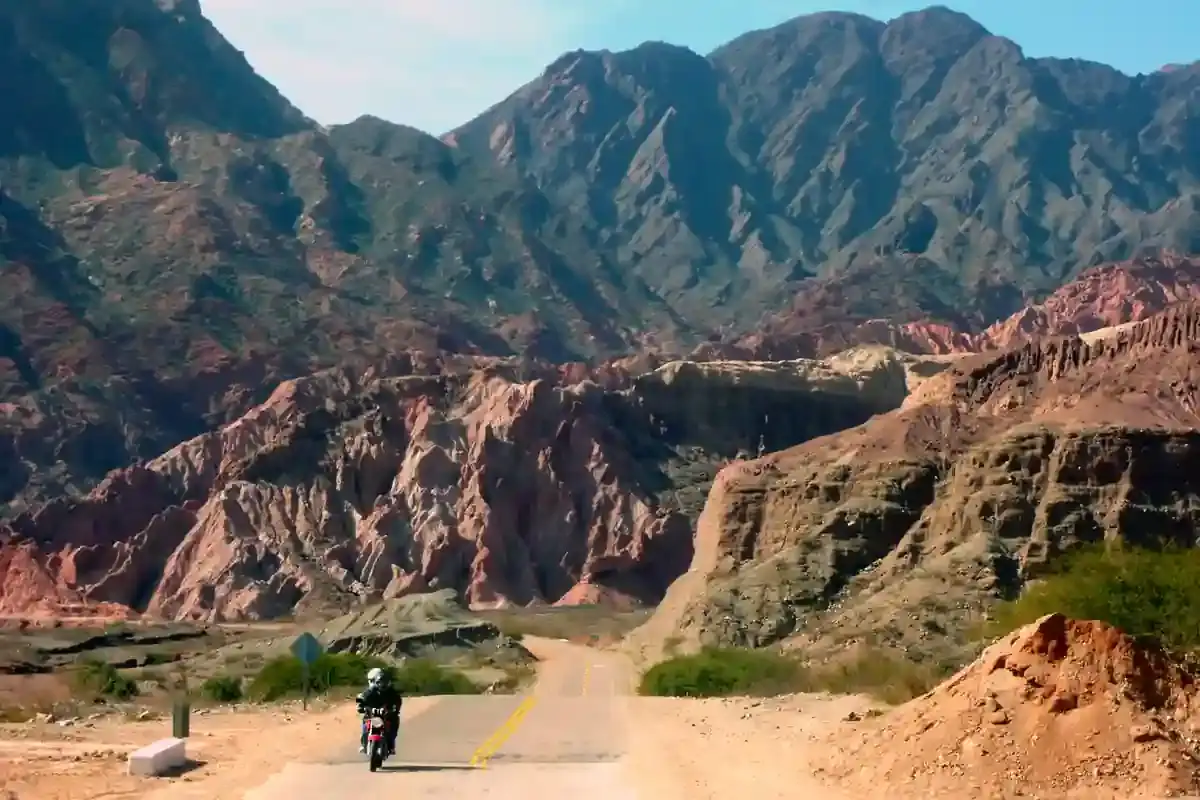
The road is paved end to end. OpenStreetMap tags 247 of the 285 km as asphalt and 14 km as gravel or dirt, most of it on side streets and the short link roads; the 24 untagged kilometres are pavement nobody has labelled. The real hazards are trucks on the canyon curves, loose gravel on the shoulders after roadworks, and the odd cow.
Fuel: easy until Epuyén, then 120 km
This is the best-served segment of the whole route: 21 stations within 1.5 km of the road, nine of them in Bariloche alone, plus the ACA pump at Villa Mascardi at kilometre 30, three in El Bolsón, one in El Hoyo and one in Epuyén at kilometre 161. From Epuyén there is nothing until the outskirts of Esquel, 120 km later. Any adventure bike covers that on half a tank, so the only real rule is to leave Epuyén with more than a quarter.
The stations in Bariloche and El Bolsón keep normal hours and some run 24/7. The small-town pumps in El Hoyo and Epuyén keep shorter hours and can close for lunch, which matters if you leave Bariloche late. Check the fuel range calculator with this segment selected if you are on something with a small tank.
The wind, or the lack of it
Among the five Ruta 40 segments this is the only one where wind is not the main variable. The reanalysis average for January is a daily maximum of 11 km/h, with about 5 days a month of gusts above 60 km/h; by comparison the Gobernador Gregores to El Chaltén segment has 21 such days. The mountains shelter the whole valley.
What you get instead is rain. From May to August the midpoint of the route sees 13 to 16 rainy days a month, and the canyon south of Mascardi gets the worst of it. Summer is dry and warm: highs of 25 °C in January and February, which on this road means long sleeves in the morning and the jacket vents open by noon.
Stops and detours worth the time
Lago Mascardi and the Tronador road. At kilometre 30 the road to Pampa Linda and the Tronador glaciers leaves Ruta 40 westward. It is a full day in itself and part of our Andes Crossing itinerary, not this one, but if you have the time it is the best gravel in the lake district.
El Bolsón. The town at kilometre 120 is the lunch stop: a craft-beer and artisan-market town between the Piltriquitrón mountain and the Río Azul. Lago Puelo, the national park at the bottom of the valley, is a 15 km detour south-west of town.
Cholila. South of Epuyén a side road heads west to the Cholila valley, where Butch Cassidy and the Sundance Kid ran a ranch from 1901 to 1905. The cabin still stands. From there Ruta Provincial 71 continues through Los Alerces national park to Trevelin and Esquel: longer, with gravel, and much prettier than the main road.
Leleque. The museum at the old Leleque estancia, right on Ruta 40 around kilometre 240, tells the history of the Tehuelche and the first settlers. Half an hour, and the only roof between Epuyén and Esquel.
Where to sleep
Bariloche has hundreds of options and is the obvious place to start. El Bolsón has hotels, cabins and campsites in every budget and is the natural halfway stop if you are riding slowly. Esquel is a proper town with a dozen hotels, mechanics and tyre shops: if something on the bike needs fixing before the long steppe days, this is the last place to do it with choice.
Riding it with us
This is day one of our Patagonia motorcycle tours south from Bariloche: a warm-up with good pavement, fuel every hour and a lunch in El Bolsón before the serious distances start. Read the Ruta 40 rider’s guide for the whole road, and the best time to ride Patagonia for the month you are planning.